


Blog

Physical Asset Management Basics
What are the top 10 worst-performing assets at our sites? First, let’s establish a formal definition of assets and reliability, ensuring they are used consistently by all stakeholders across our sites. Too often, we use those terms without knowing what we’re talking about. You may feel like you know what these terms mean on their own. However, do you truly comprehend what they mean when used in conjunction with one another? Maintenance & reliability professionals must come together to benefit your business. How can we use these terms and form a strategy for success?
Focusing On What You Truly Need To Improve Asset Management
Two things: OBSERVE and LISTEN OBSERVE both the equipment when you walk the facility and the people you meet. Observe their body language. LISTEN to what your client, internal or external, says. Truly listen. Far too often, while we listen to someone speaking, we are also preparing our reply/retort without fully listening to what’s being said. The ability to observe and listen is crucial to finding out not just what your client SAYS they need but actually finding out what the client TRULY needs. The first step we recommend is to perform a Reliability Diagnostic. Agreeing with the results of this step and seeing the answers firsthand will convince everyone of the direction that needs to be taken and the order in which to take those steps. Never sweep the results under the carpet because you don’t like them or because you consider them as perceptions. Remember, if it’s a perception, then that means it's reality for many people.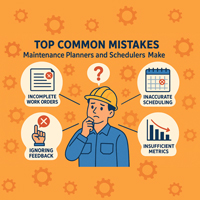
Top Common Mistakes Maintenance Planners Make
1. Planning from the desk instead of the field... 2. Writing vague or incomplete job plans... 3. Not coordinating with stores for availability of parts and materials (Scheduling function)... 4. Planning reactive work instead of enforcing a backlog...


