


Blog
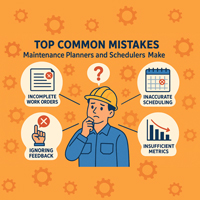
Top Common Mistakes Maintenance Planners and Schedulers Make
1. Planning from the desk instead of the field
- Not inspecting the job site
- Missing access issues, safety hazards, or real conditions
- Not verifying parts, tools, or special equipment (Scheduling function)Result: Technicians arrive and immediately “discover” problems the planner should have caught.
2. Writing vague or incomplete job plans
Examples:
- “Fix pump.”
- “Replace motor.”
- “Inspect conveyor.”
Without:
- Clear scope
- Task steps
- Torque values
- Tools required
- Permits needed
- Estimated labour hoursResult: Rework, inconsistent work quality, and troubleshooting delays.
3. Not coordinating with stores for availability of parts and materials (Scheduling function)
- Assuming parts are in stock
- Not checking lead times
- Not verifying the correct revision or BOMResult: Techs waste time searching for materials or jobs get postponed.
4. Planning reactive work instead of enforcing a backlog
Many planners get dragged into “firefighting,” and then:
- Stop doing forward planning
- Spend time chasing emergencies
- Let PM and corrective backlog growResult: Chronic reactive culture.
5. Not maintaining an organized, prioritized backlog
- Jobs lacking prioritization (criticality-based)
- No standard lead times
- Duplicate work orders
- Poor descriptionsResult: Scheduler can’t build a realistic weekly schedule.
6. Overestimating or underestimating job durations
- No feedback loop from technicians
- Poor descriptionsResult: Schedule non-compliance.
7. Not communicating with technicians or supervision
- Not asking for input during plan development
- Not reviewing completed work orders, No Consistent Quality control of provided information before closing work orders.
- Not gathering feedback to improve future plansResult: Plans never improve and mistakes repeat.
8. Ignoring failure history and asset condition data
- Not reviewing past breakdowns
- Not checking trends in CMMS, PdM systems, or OT dataResult: Plans don’t address root causes and repeat failures
9. Using planners as relief supervisors, expediters or parts chasers
This isn’t a planner’s fault, but it’s a common organizational mistake:
- Planners run around finding parts
- Get pulled into daily emergencies
- Lose time for proactive planningResult: No planning → no stability → more reactive work.
10. Not setting up job plans for repeatability
- No standard job plans for recurring work
- No templates for PMs or common failuresResult: Every job becomes a “reinvent the wheel” exercise.
11. Allowing work to be planned without proper priority or approval
- Planning tasks that aren’t necessary
- No supervisor/engineering review, No Consistent Quality control of provided information before prioritizing or approval.Result: Waste of labor on low-value work.
12. Not training your planners and schedulers properly
- How to use the CMMS that you have in place
- The maintenance planning and scheduling process
- Where to find equipment data and information, things like data sheets, and drawings, and equipment manuals.
- How to create and store job plans and work packages.
- How to order parts and materials.
- The kitting and staging processes that happen in the warehouse.
- Result: Unwanted increase in the Mean Time To Repair.


